
Popcorn Ceiling Removal for Rentals & Condos
For landlords, property managers and condo owners in Gainesville: testing, removal and finishing planned around turnover dates and association rules, so units get back on the market with updated ceilings.
Get a Free QuoteWhy rentals and condos are a special case
Gainesville is a renter’s town, and a lot of its rental housing dates from the popcorn-ceiling era.
The Census estimates only 37.7% of occupied homes in Gainesville are owner-occupied, which means about 62% are rented, roughly 37,241 renter units. Around the University of Florida, the share is even higher. In ZIP 32603, just 9.7% of homes are owner-occupied, with a median build year of 1977. In 32601, it’s 24.0% owner-occupied with a median build year of 1975. UF enrolled 56,311 students in 2024, and much of the housing near campus is overwhelmingly rentals.
Those build years matter. EPA banned spray-applied surfacing asbestos in stages in 1973 and 1978, but existing stock could still be installed afterward, so homes built or remodeled into the 1980s can have asbestos in their popcorn texture. For a landlord, that turns a cosmetic upgrade into a planning question: test, schedule, and get the unit back on the market.
Test first, in every unit. We coordinate professional asbestos testing before removal. Negative: we remove and finish. Positive: a licensed asbestos abatement contractor handles removal, and we can refer you. We never perform asbestos abatement.
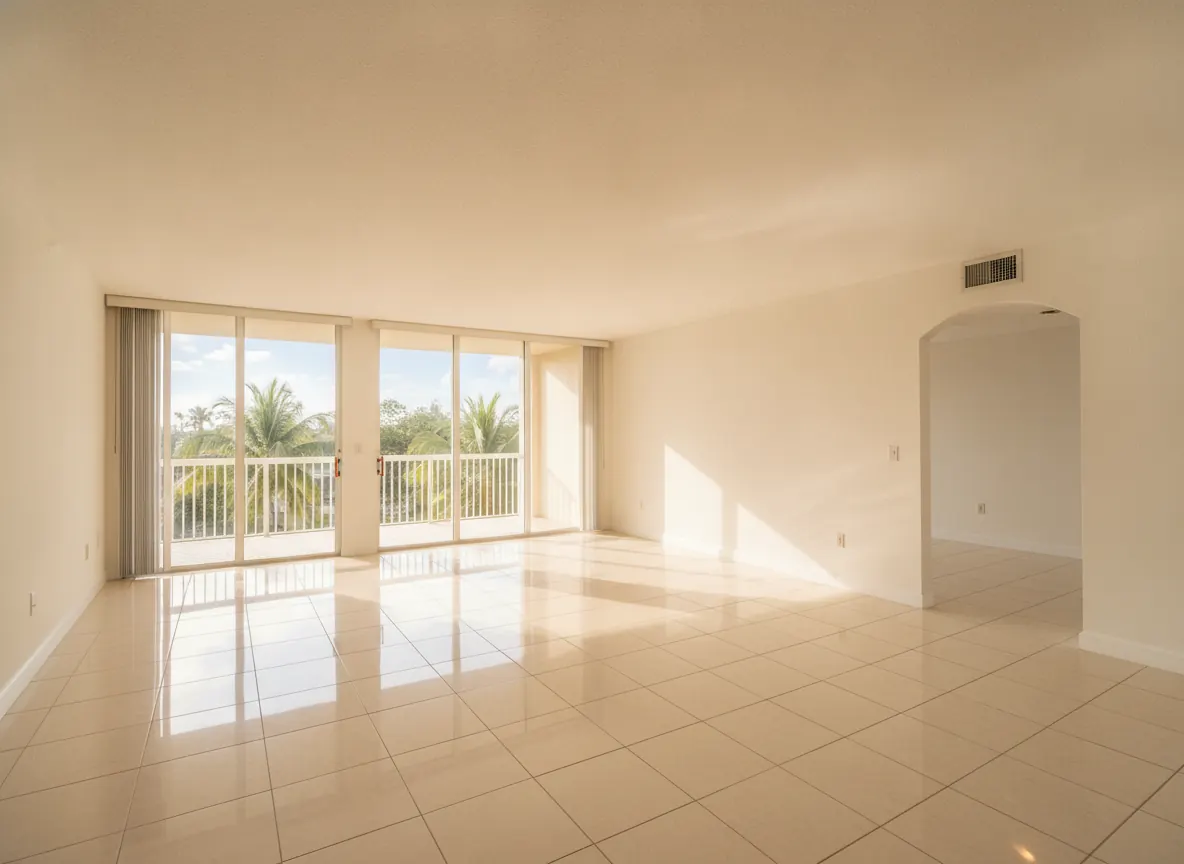
Planning around turnover
The easiest window for ceiling work is the gap between tenants. An empty unit means no furniture to cover, no one living with plastic sheeting and no scheduling around someone’s workday. To make the most of a short window:
- Book asbestos testing as soon as you know the move-out date
- Get the lab result back before the unit is vacant, where access allows
- Choose your finish early: smooth, knockdown or orange peel
- Group units if you manage several, so testing and work can be batched
- Leave time for painting and a final clean before showings
We give property managers a clear scope and timeline per unit so leasing can plan around it.
How a rental or condo job runs
Walk-through and scope
We look at each unit (or a representative unit in a building), note ceiling areas and any water damage, and agree on finishes.
Testing
Professional sampling and accredited lab analysis for each distinct ceiling. Results decide the next step.
Association coordination
For condos, we provide scope, schedule and debris plans for the manager or board, and work within the association’s access and hours rules.
Removal and finishing
After a negative result: containment, removal, repairs, then smooth finish or retexture.
Paint and hand back
Primer, flat ceiling paint and cleanup, ready for listing photos.
The containment and cleanup steps are described in detail on our process page.
Multi-unit buildings and the asbestos NESHAP
Rules can change once a building has more than four units. Florida DEP’s asbestos FAQ says the federal NESHAP residential exemption covers a building with 4 or fewer units that is not part of a larger project and was never used commercially. NESHAP applies above 4 units and to commercial buildings, with notifications due 10 working days before work and, since March 23, 2025, a $200 fee ($100 if filed electronically). EPA guidance from 1995 adds that renovating an isolated small residential building isn’t covered, but multiple buildings on one site or larger projects are. The residential exemption also doesn’t exempt anyone from OSHA or licensing rules.
For landlords specifically, Florida statute 469.002’s owner exemption applies only to a residence the owner occupies that is not for sale or lease, and it does not cover contractors.
This isn’t legal advice; check with the agency or a licensed professional. Our Florida asbestos rules guide covers these points in more depth.
Choosing a finish and budgeting per unit
Many landlords pick knockdown or orange-peel texture because it hides wear and is easy to touch up between tenants; others go smooth for a more updated listing. National cost guides put removal at about $1–$4 per square foot after a negative test, a bedroom of about 200 square feet at $200–$800, and retexture at $0.60–$2 per square foot. These are estimates; see the full table on our cost guide and request a free quote for your units.
Rentals & condos FAQ
Can you remove popcorn ceilings between tenants?
Yes, and turnover is usually the easiest time. An empty unit means no furniture to protect and no tenants to work around. The main timing factor is asbestos testing, which has to come back before any scraping. Booking the test as soon as you know a unit will be vacant keeps the schedule tight.
Do the asbestos rules differ for a condo or apartment building?
They can. Florida DEP’s asbestos FAQ says the federal NESHAP residential exemption covers a building with 4 or fewer units that is not part of a larger project and was never used commercially; NESHAP applies above 4 units and to commercial buildings. This isn’t legal advice; check with the agency or a licensed professional.
Can a landlord remove an asbestos popcorn ceiling themselves?
Florida statute 469.002 exempts an owner from asbestos licensing only when removing asbestos-containing material in a residence they occupy that is not for sale or lease, and the exemption does not cover contractors. A rental is, by definition, leased. This isn’t legal advice; check with the agency or a licensed professional before deciding.
Do I need HOA or condo association approval?
Many associations have rules about contractor access, work hours, elevator use, debris removal and parking, and some require approval before interior work. We can’t tell you what your association requires, so check your documents or ask the manager. We’re glad to provide whatever scope details or scheduling information the board asks for.
What finish works best in a rental?
Many landlords choose knockdown or orange-peel texture because it hides minor flaws and is easy to touch up between tenants, and it usually costs less than a full smooth finish. Smooth ceilings look sharper in listing photos but show wear and patches more. We’ll go over both during the free quote.
Ready for smooth, modern ceilings?
Free, no-pressure quotes across Gainesville, Alachua, Newberry, High Springs and the rest of Alachua County.