
Ceiling Painting After Popcorn Removal
The last step is the one you see every day. We prime and paint freshly finished ceilings with a flat ceiling paint so the new surface looks clean, even and bright.
Get a Free QuoteWhy a new ceiling needs the right paint job
A skim-coated or retextured ceiling is not finished until it is sealed and painted properly.
After popcorn removal, your ceiling is a patchwork of materials: bare drywall paper, fresh joint compound, repaired seams and sometimes a few new pieces of drywall. Each one absorbs paint at a different rate. Roll finish paint straight onto that, and you get a ceiling that looks blotchy in daylight, with shiny patches over the compound and dull areas over the paper.
Ceilings are also hard to paint well. They catch light from windows and fixtures at low angles, which exaggerates roller marks, lap lines and any sheen. Getting it right comes down to three things: the right primer, the right paint and an even application.
Painting comes after testing and removal. We coordinate asbestos testing before any popcorn ceiling is scraped. If it tests negative, we remove, finish and paint. If it tests positive, a licensed abatement contractor handles removal first, and we can paint afterward.
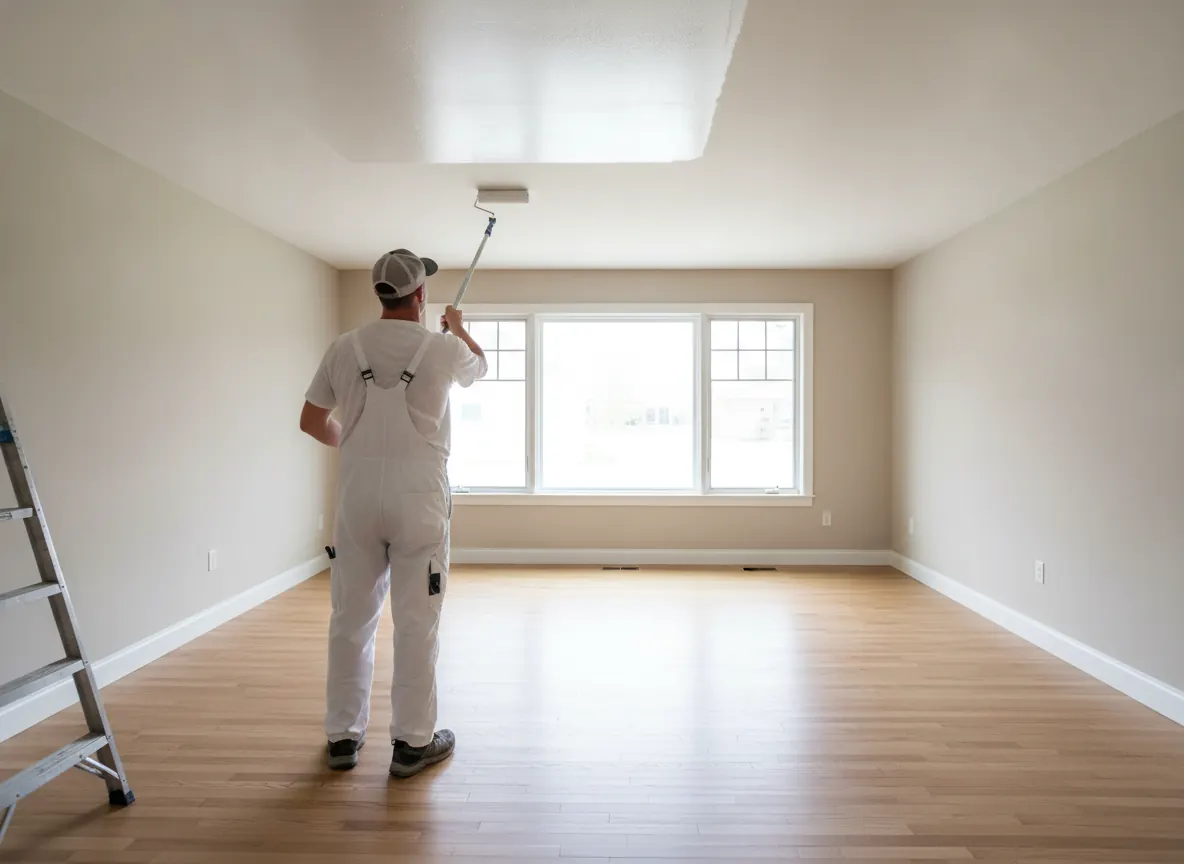
Primer, then flat ceiling paint
Primer. A drywall primer seals compound and paper to one even surface so the finish coat goes on uniformly. Where old water stains are present, we switch to a stain-blocking primer so the marks don’t creep back through the new paint.
Flat ceiling paint. Flat finishes scatter light instead of reflecting it, which hides minor surface variations. That’s why most ceilings are painted flat white. If you want a soft color overhead, we use a flat finish in that color.
- Primer matched to the surface: drywall or stain-blocking
- Flat ceiling paint to hide seams and roller marks
- Edges cut in cleanly at walls, crown and fixtures
- Rolled in consistent sections to avoid lap lines
How we paint a refinished ceiling
Protect the room
Floors and furniture stay covered from the removal stage, and walls, trim and fixtures are masked.
Final surface check
We check the ceiling under a light for any last ridges or dents and touch them up before primer.
Prime
The full ceiling gets primer, not just the patches, so the finish coat looks uniform.
Cut in and roll
Edges are cut in, then the ceiling is rolled in manageable sections while the paint is still wet at the edges.
Second coat and cleanup
A second coat where needed, then masking comes off and the room is cleaned up.
Our process page shows how painting fits after containment, removal and finishing.
The painted-popcorn problem
Plenty of Gainesville homeowners have tried to freshen up a popcorn ceiling by painting it. It can work for a while, but it creates two problems. First, a roller can pull loose chunks of texture, especially on older ceilings. Second, paint seals the popcorn. Unpainted texture usually softens when misted with water, which makes scraping cleaner; painted texture resists the water, so removal is slower and more labor-intensive later on.
If your popcorn ceiling has already been painted, it can still be removed. It just takes more time, and that is reflected in the quote. Whether painted or not, we test before scraping. If you are weighing your options, our guides on remove, cover or encapsulate and what to do after popcorn ceiling removal may help.
Painting pricing
National cost guides put ceiling painting after removal at about $1–$3 per square foot. Many homeowners bundle it with removal ($1–$4 per square foot after a negative test) and a smooth skim-coat finish ($1–$1.50 per square foot). These are estimates; see all ranges and the calculator on our cost guide, and get a free quote for your home.
Ceiling painting FAQ
Do I need primer before painting a ceiling after popcorn removal?
Yes. Bare drywall paper, fresh joint compound and patched areas all absorb paint differently. Without primer, the finish coat dries unevenly and you see blotches and shiny patches, called flashing. A drywall primer seals everything to one even surface. Over old water stains, we use a stain-blocking primer instead so marks don’t bleed through.
Why use flat paint on ceilings?
Flat ceiling paint reflects light diffusely, so it hides small bumps, seams and roller marks far better than eggshell or satin. Ceilings catch a lot of low-angle light from windows and fixtures, and any sheen exaggerates imperfections. Flat white is the standard, but we can roll a flat finish in a color if you prefer.
Can you just paint over my popcorn ceiling instead?
You can, but it has trade-offs. Rolling paint can pull popcorn loose, and the paint seals the texture, which makes future removal harder because it no longer softens easily with water. Painting also disturbs the surface, so we’d still recommend asbestos testing first. Many homeowners decide removal and a fresh finish is the better long-term choice.
Is a painted popcorn ceiling harder to remove?
Usually, yes. Popcorn texture normally softens when misted with water, which makes scraping cleaner. Paint seals it, so the water can’t soak in, and removal takes more time and effort. That can raise the cost. We test for asbestos first, then look at how the painted texture responds before giving a firm price.
How much does ceiling painting cost after popcorn removal?
National cost guides put ceiling painting after removal at about $1–$3 per square foot. The price depends on room size, ceiling height, how much repair and priming is needed, and whether you want a color. These are typical ranges, not a quote; we confirm your price after an in-home look.
Ready for smooth, modern ceilings?
Free, no-pressure quotes across Gainesville, Alachua, Newberry, High Springs and the rest of Alachua County.